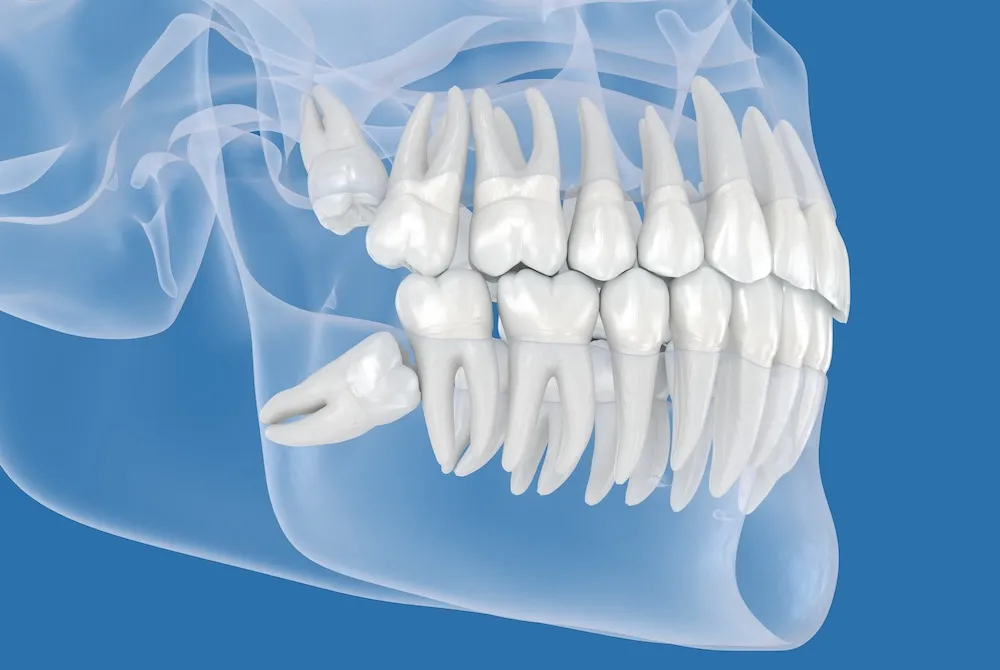
How many teeth do humans have? The short answer is 20 primary teeth in children and up to 32 permanent teeth in adults. However, the number visible in the mouth can vary considerably depending on age, wisdom teeth, previous extractions, congenitally missing teeth, orthodontic treatment, and tooth loss.
A healthy adult who has all four wisdom teeth normally has 32 permanent teeth. An adult whose wisdom teeth never developed, never erupted, or were removed commonly has 28. Understanding these numbers is useful because every tooth occupies a specific position and performs a particular role in chewing, speech, facial support, bite balance, and overall oral health.
1. How Many Teeth Do Humans Have During Their Lifetime?
Humans normally develop two dentitions during life: the primary dentition and the permanent dentition. The primary set contains 20 teeth, while a complete permanent set contains 32.
This does not mean a person has only 32 teeth throughout an entire lifetime. The baby teeth are gradually replaced by permanent teeth, so a person typically develops 52 individual teeth across both dentitions. At certain ages, particularly during mixed dentition, children can have baby and permanent teeth present at the same time.
The transition is carefully coordinated with jaw growth. Permanent teeth are larger and require more space, which is one reason a child’s dental arches change substantially as the face develops.
2. How Many Baby Teeth Do Humans Have?
Children normally have 20 primary teeth: 10 in the upper jaw and 10 in the lower jaw. These include incisors, canines, and molars. Unlike adult dentition, the primary dentition does not contain premolars.
Baby teeth are sometimes underestimated because they eventually fall out, but clinically they are extremely important. They help children chew, pronounce sounds correctly, maintain facial dimensions, and preserve space for developing permanent teeth.
Premature loss of a primary tooth can sometimes allow neighboring teeth to drift into the empty space. Depending on the child’s age and dental development, this may affect the eruption path of the permanent successor.
3. How Many Adult Teeth Do Humans Have?
A complete adult dentition contains 32 permanent teeth, consisting of 16 upper teeth and 16 lower teeth. The total includes four third molars, commonly known as wisdom teeth.
The permanent dentition normally consists of eight incisors, four canines, eight premolars, and twelve molars. Each group has a different anatomical form because different teeth perform different tasks.
Not everyone reaches a count of 32. Some people are born without certain teeth, while others never develop one or more wisdom teeth. Extractions, trauma, gum disease, severe decay, and previous orthodontic treatment can also reduce the number present.
4. Why Do Some Adults Have Only 28 Teeth?
Twenty-eight teeth can represent a completely functional adult dentition. The difference between 28 and 32 is usually the four wisdom teeth.
Third molars are the last permanent teeth to develop and generally appear much later than the rest of the dentition. Some erupt normally, some remain partially erupted, and others remain impacted beneath the gum or bone.
If wisdom teeth are absent or have been extracted, an adult usually has 28 teeth: eight incisors, four canines, eight premolars, and eight first and second molars.
Whether wisdom teeth should remain in place depends on their position, surrounding tissues, hygiene accessibility, symptoms, and clinical and radiographic findings rather than their presence alone.
5. What Types of Teeth Do Humans Have?
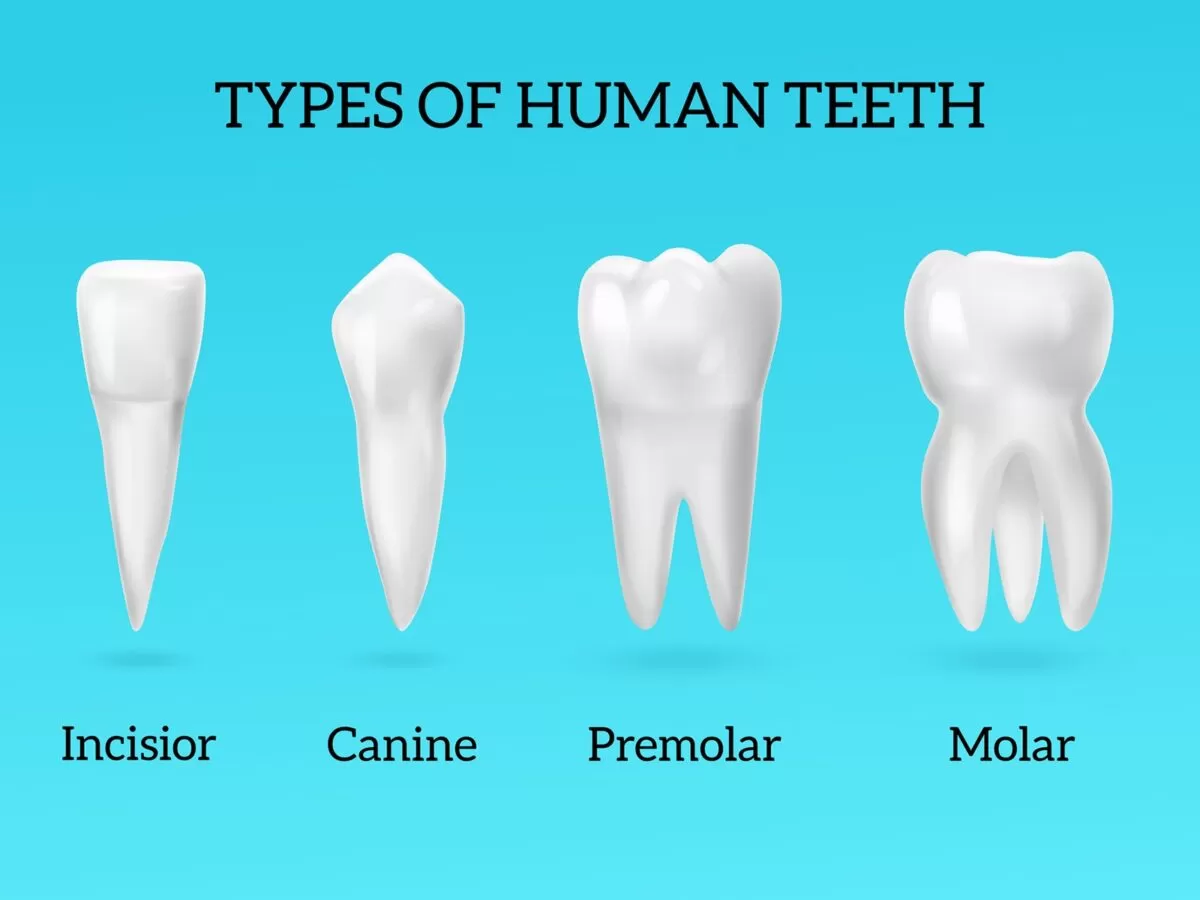
The shape of a tooth gives a strong clue to its function. Incisors have relatively thin cutting edges for biting. Canines have prominent cusps that help tear food and guide jaw movements. Premolars combine tearing and crushing functions, while molars provide broad chewing surfaces for grinding.
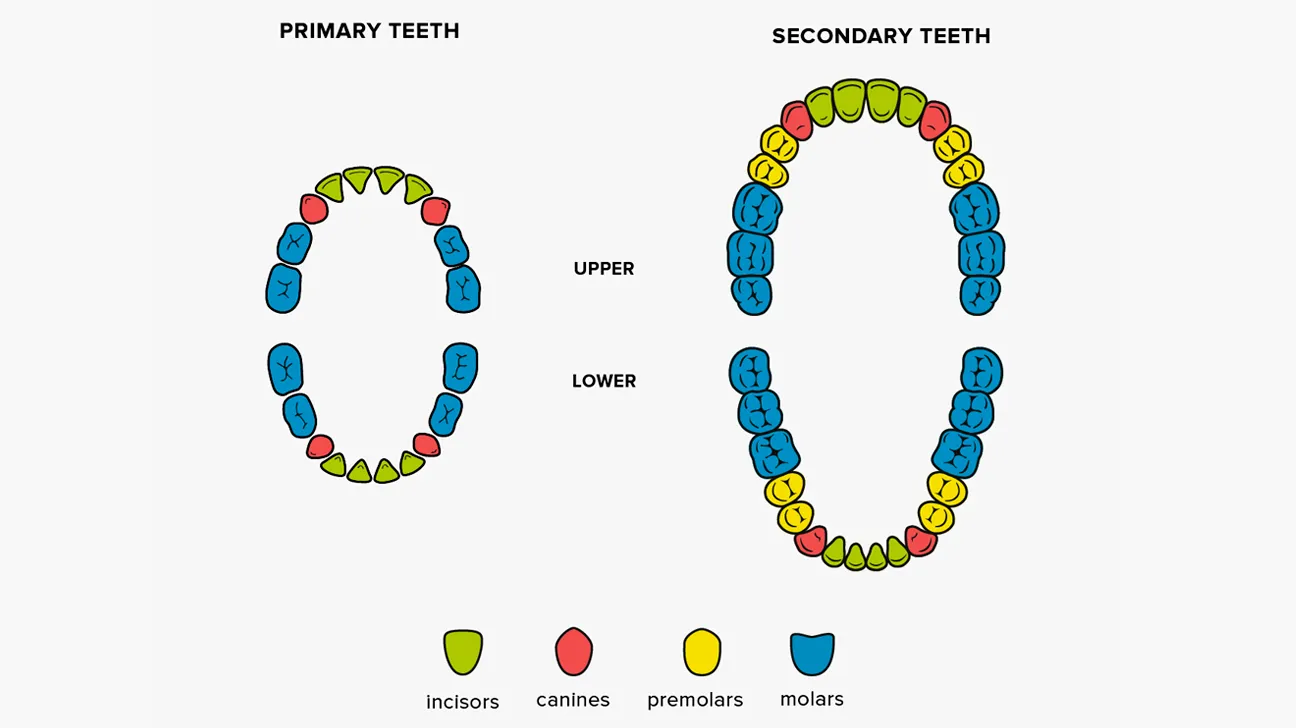
A complete permanent dentition contains:
- 8 incisors: four upper and four lower front teeth.
- 4 canines: pointed teeth positioned beside the lateral incisors.
- 8 premolars: teeth located between the canines and molars.
- 12 molars: including four wisdom teeth when all are present.
6. How Many Front Teeth Do Humans Have?
Humans have 12 anterior teeth when the incisors and canines are counted together. These consist of eight incisors and four canines.
The four central incisors are particularly influential aesthetically because they occupy the center of the smile. Dentists assessing smile design evaluate their width-to-length proportions, midline position, edge symmetry, translucency, surface texture, and relationship to the lips.
Healthy natural front teeth are not usually a single flat shade. Subtle translucency and differences in brightness contribute to a natural appearance, which is also important when planning veneers or crowns.
7. How Many Molars and Premolars Do Humans Have?
Adults normally develop eight premolars and twelve molars when wisdom teeth are included. Without wisdom teeth, there are eight molars.
Premolars occupy the transition between the pointed canines and broad posterior molars. Their cusps help crush food before the molars complete the grinding process.
Posterior teeth also carry substantial biting forces. Restoring damaged molars is therefore not purely cosmetic. A restoration must reproduce appropriate contact points and bite relationships while leaving enough durable tooth structure to withstand chewing forces.
8. When Do Humans Get Their Permanent Teeth?
The transition to permanent teeth begins during childhood. First permanent molars and lower central incisors frequently emerge around six to seven years of age. Other incisors, premolars, and canines gradually follow as the jaws develop.
Second molars usually appear during early adolescence. Third molars develop considerably later and, when they erupt, commonly appear during the late teenage years or early adulthood.
This period of mixed dentition is clinically important. Regular dental examinations can identify delayed eruption, crowding, missing teeth, abnormal eruption paths, enamel problems, and early cavities before they become more difficult to manage.
Your Complete Smile Can Be Restored
Today, a healthier and more confident Hollywood Smile is achievable for many patients. Modern dentistry in Turkey combines advanced diagnostic technology, carefully planned restorative treatment, experienced dental teams, and competitive treatment costs. Whether several teeth are damaged or an entire dental arch requires rehabilitation, the correct solution begins with an individualized clinical assessment.
| Treatment | Price Range |
|---|---|
| All-on-4 Dental Implants | €4,999 – €5,499 |
| All-on-6 Dental Implants | €6,499 – €7,499 |
| Zygomatic Implants | €3,499 – €4,999 |
| Hollywood Smile | €1,999 – €3,499 |
| Dentist Consultation | FREE |
9. Can Humans Have More Than 32 Teeth?
Yes. Additional teeth beyond the normal dental formula are known as supernumerary teeth. They may occur anywhere in the dental arches and may remain unerupted, which means they are sometimes discovered only on an X-ray.
An extra tooth does not automatically require removal. The clinical decision depends on its position and whether it interferes with eruption, causes crowding, contributes to pathology, or complicates orthodontic treatment.
Radiographic assessment is particularly valuable when the visible tooth count does not match what would normally be expected for a person’s age.
10. Can Humans Naturally Have Fewer Than 32 Teeth?
Yes. Some permanent teeth may never develop, a condition known as tooth agenesis. Wisdom teeth are among the most variable teeth, but other permanent teeth can also be congenitally absent.
Other people have fewer teeth because of extraction, trauma, advanced decay, periodontal disease, or orthodontic treatment. Therefore, tooth number by itself does not determine oral health.
A dentist also evaluates gum condition, bone support, tooth stability, bite, spacing, decay, existing restorations, and chewing efficiency.
11. What Does the Human Dental Arch Look Like?
Teeth are arranged in curved upper and lower arches rather than straight rows. The relationship between these arches influences bite function, facial proportions, phonetics, and smile aesthetics.
Clinically, dentists examine arch width, crowding, spacing, tooth inclination, midline position, overbite, overjet, and the contacts between upper and lower teeth.
An attractive smile is therefore not simply about having 28 or 32 white teeth. Proportion, alignment, gingival architecture, tooth display, and harmony with the lips and face are equally significant.
12. What Happens When a Permanent Tooth Is Lost?
Unlike primary teeth, a lost permanent tooth is not naturally replaced by another tooth. The empty space can gradually influence surrounding structures. Neighboring teeth may tilt, the opposing tooth may move toward the gap, and the bone that previously supported the tooth can gradually change after extraction.
Replacement options depend on the clinical situation and may include bridges, removable prostheses, or dental implants. Patients considering implant replacement can read the detailed dental implant procedure in Turkey to understand assessment, implant placement, healing, and final restoration.
13. Can Veneers Change the Number of Teeth?
No. Veneers change the visible appearance of existing teeth but do not increase the natural tooth count. A veneer is a thin aesthetic restoration placed over the front surface of a tooth.
When appropriately indicated, veneers can improve tooth shape, proportions, color, minor spacing, worn edges, and selected aesthetic irregularities. Their principal benefit is the ability to redesign the visible smile while preserving more natural tooth structure than some full-coverage restorations.
They are not appropriate for every patient. Active decay, untreated gum disease, significant structural damage, or certain bite problems should be addressed before cosmetic treatment.
14. Do Braces or Invisalign Change How Many Teeth Humans Have?
Orthodontic treatment primarily moves teeth rather than changing their number. Braces and clear aligners can correct crowding, spacing, rotations, and selected bite relationships.
In some orthodontic plans, extraction may be considered when severe crowding or specific skeletal and bite conditions require additional space. This decision must be individualized using clinical examination, photographs, scans, and radiographs.
Patients should not assume that extraction is necessary simply because their teeth appear crowded. Modern treatment planning considers multiple approaches before irreversible procedures are selected.
15. Why Can Teeth Look Asymmetrical Even When the Number Is Normal?
A person can have every expected tooth and still notice an uneven smile. Dental symmetry depends on much more than tooth count.
Differences in tooth width, crown length, gum levels, rotations, wear, midline position, previous restorations, and lip movement can all create visible asymmetry. Mild asymmetry is also common in natural dentitions and does not necessarily indicate disease.
Cosmetic treatment should aim for facial harmony rather than mechanically making every tooth identical.
16. How Can You Protect All of Your Natural Teeth?
Keeping natural teeth is generally preferable whenever they remain healthy and predictably restorable. Daily plaque control, appropriate fluoride exposure, interdental cleaning, a balanced diet, and professional dental assessment all contribute to long-term preservation.

Routine examinations have an important preventive role because early enamel lesions or gum inflammation may cause few symptoms. Treating problems before they progress can preserve considerably more natural tooth structure.
Patients requiring restorative, preventive, cosmetic, or surgical care can also review available dental treatments in Turkey.
For patients who have already lost most or all teeth in an arch, fixed full-arch implant concepts may be considered after detailed bone and medical assessment. Learn more about All-on-4 dental implants in Istanbul.
17. Frequently Asked Questions About How Many Teeth Humans Have
How many teeth does a normal adult have?
A complete permanent dentition has 32 teeth when all four wisdom teeth are present.
How many teeth do adults have without wisdom teeth?
Adults normally have 28 permanent teeth when the four third molars are not present.
How many teeth does a child have?
A complete primary dentition contains 20 baby teeth.
Do humans have 28 or 32 teeth?
Both numbers can be normal. There are 28 permanent teeth excluding wisdom teeth and 32 when all four wisdom teeth are included.
How many front teeth do humans have?
There are eight incisors. When the four canines are included in the anterior region, humans have 12 anterior teeth.
How many wisdom teeth can a person have?
The standard dental formula includes four, but some people naturally develop fewer or none.
Can an adult have more than 32 teeth?
Yes. Supernumerary teeth can increase the number beyond the usual 32.
Can missing teeth affect the bite?
Yes. Depending on the location and duration of tooth loss, surrounding and opposing teeth can change position and bite relationships may be altered.
18. In Summary: How Many Teeth Do Humans Have?
Children normally have 20 primary teeth, while adults can have 32 permanent teeth when all four wisdom teeth are present. Adults without wisdom teeth commonly have 28.
The number is only part of the clinical picture. Incisors cut, canines guide and tear, premolars crush, and molars grind. Together, these teeth contribute to efficient chewing, speech, facial support, bite stability, and smile aesthetics.
Protecting that natural dentition requires more than waiting until a tooth hurts. Consistent home care and periodic professional examinations allow dentists to identify decay, gum disease, wear, eruption problems, and bite changes earlier. When teeth are damaged or missing, modern restorative dentistry offers solutions ranging from conservative restorations and veneers to orthodontics, crowns, bridges, and implant-supported rehabilitation.
If your own tooth count is different from 28 or 32, that does not automatically indicate a problem. A clinical examination and, when appropriate, dental imaging can establish exactly which teeth are present, absent, unerupted, or previously removed and help determine whether any treatment is actually necessary.